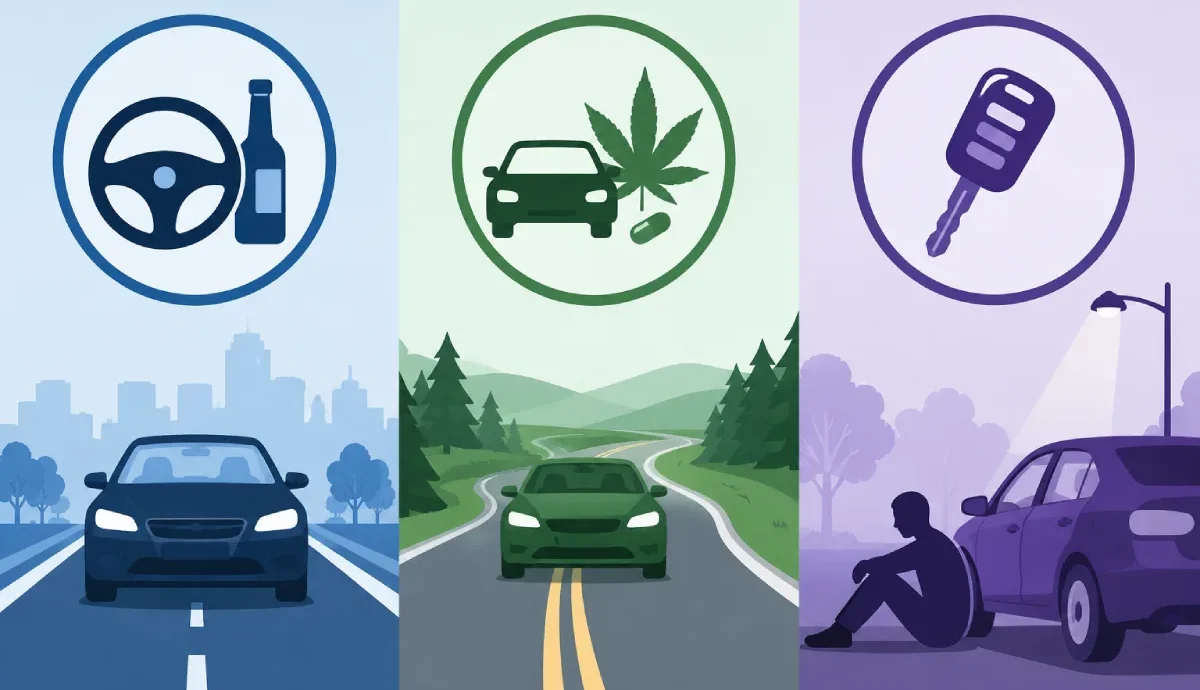
If you have been researching impaired driving laws, you may have encountered the terms OWI, DUI, and DWI. While these terms are often used interchangeably, they do not all mean the same thing. The terminology varies from state to state, which can create confusion for drivers trying to understand their rights or the charges they may face. The distinction is particularly important because the state uses a specific legal term for alcohol- and drug-related driving offenses.
At DWI Lawyers Minnesota, we believe learning how OWI, DUI, and DWI differ can make legal research less confusing and help you better understand the terminology used in impaired driving laws.
Understanding OWI, DUI, and DWI
OWI, DUI, and DWI are acronyms commonly used to describe impaired driving offenses. However, each state determines which terminology it uses in its statutes.
| Category | DWI | DUI | OWI |
| Meaning | Driving While Impaired | Driving Under the Influence | Operating While Intoxicated |
| Used in Minnesota? | Yes | No (not a statutory offense) | No (not a statutory offense) |
| Legal Status | Official impaired driving offense in Minnesota. | Widely recognized throughout the United States. | Official impaired driving term in states such as Wisconsin and Michigan. |
| Scope of Conduct | Applies to driving, operating, or being in physical control of a motor vehicle while under the influence of alcohol. | Generally, refers to driving or operating a vehicle while under the influence of alcohol or drugs, depending on state law. | In many OWI states, “operating” may encompass conduct beyond actively driving a moving vehicle. |
| Substance Coverage | Applies to impairment caused by controlled substances or intoxicating substances. | In many states, DUI offenses may involve impairment caused by alcohol, controlled substances, or other intoxicating substances. | May apply to impairment caused by alcohol, controlled substances, or other intoxicating substances, depending on state law. |
| Alcohol Concentration Standard | Includes having an alcohol concentration of 0.08 or more within two hours of driving, operating, or being in physical control of a motor vehicle. | Many DUI states use a per se alcohol concentration limit of 0.08, though standards vary by jurisdiction. | Many OWI states use a per se alcohol concentration limit of 0.08, though standards vary by jurisdiction. |
| Additional Enforcement Considerations | May involve allegations of chemical test refusal. | In Minnesota, a DUI reference usually refers to a DWI offense. | Minnesota prosecutes impaired driving cases under DWI laws instead. |
| Overall Coverage | Covers both alcohol- and drug-related impairment. | Generally, covers alcohol- and drug-related impairment, depending on state law. | Generally, covers alcohol- and drug-related impairment, depending on state law. |
Although these terms generally refer to operating a vehicle after consuming alcohol or drugs, the official terminology and legal definitions vary by jurisdiction.
Why Do Different States Use Different Terms?
Different states have adopted different terminology over time based on legislative decisions and legal history. While the names may differ, the underlying goal remains the same: preventing individuals from operating vehicles while impaired by alcohol or drugs. For example:
- Minnesota uses DWI.
- Wisconsin uses OWI.
- Michigan uses OWI and OWVI.
- Illinois uses DUI.
- North Carolina uses DWI.
- California uses DUI.
As a result, drivers relocating from another state often continue to use the terminology they are most familiar with, even though laws refer to these offenses as DWI.
Does the Difference of Words Affect the Penalties?
Not necessarily. The terminology itself does not determine the penalties. What matters is the law of the state where the offense occurred and the specific facts of the case. The penalties for the charges can vary depending on factors such as:
- Prior qualified impaired driving incidents
- The driver’s alcohol concentration
- Whether aggravating factors are present
- Whether a child was in the vehicle
- Whether the incident resulted in injury or death
- Whether chemical test refusal allegations are involved
Depending on the circumstances, a DWI case may lead to criminal penalties, driver’s license consequences, ignition interlock requirements, fines, probation, or incarceration.
Know more – Defending High-BAC DWI Charges Above 0.20 in Minnesota: Aggravating Factors and Felony Exposure
Can You Be Charged If Your Vehicle Was Parked?
Potentially, yes. The law does not limit DWI charges to situations where a vehicle is actively moving. A person may be charged if they are found driving, operating, or in physical control of a motor vehicle while impaired.
Courts evaluate the specific facts of each case when determining whether someone was in physical control of a vehicle. Because of this broad definition, a parked vehicle does not automatically prevent a DWI charge.
Knowing Your Rights and Legal Options
Although OWI, DUI, and DWI are often used interchangeably in everyday conversation, Minnesota law officially uses the term Driving While Impaired (DWI) to describe impaired-driving offenses involving alcohol, controlled substances, intoxicating substances, or certain hazardous substances. Understanding this distinction can help you find accurate legal information, recognize how the law approaches impaired driving allegations, and better understand the legal process if you are facing a charge.
If you have questions about a DWI charge or its potential consequences, understanding your rights and legal options is an important first step. DWI Lawyers Minnesota helps you handle DWI cases and protect your rights. Call +1 (612) 255-5922 anytime to discuss your situation and learn how our team can help. We offer a free case evaluation to help you understand your options.
Frequently Asked Questions
Can I be charged with DWI if I was impaired by drugs rather than alcohol?
Yes. DWI laws apply to alcohol as well as controlled substances and other intoxicating substances. A person may face DWI charges if a substance impairs their ability to operate a motor vehicle safely, even when alcohol is not involved.
Does Minnesota recognize OWI or DUI convictions from other states?
In some circumstances, yes. The state may treat certain out-of-state impaired driving offenses as qualified prior impaired driving incidents. Whether a prior OWI or DUI conviction qualifies depends on the laws of the other state and the facts of the prior offense.
What is the legal alcohol limit?
For most drivers age 21 and older, the state prohibits driving with an alcohol concentration of 0.08 or more as measured within two hours of driving, operating, or being in physical control of a motor vehicle. Different standards apply to certain drivers, including commercial drivers.