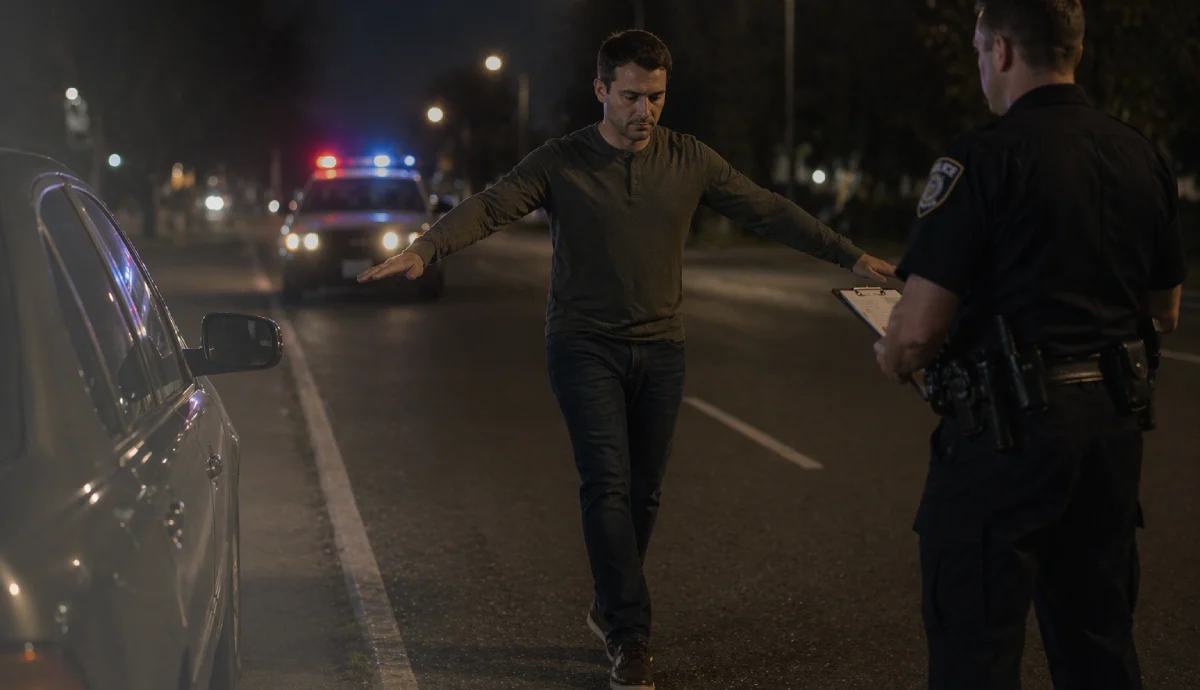
Quick Summary
Field sobriety tests in DUI stops are used to observe balance, coordination, and focus, rather than to determine guilt on the spot. They give officers a way to assess possible signs of impairment in real-time conditions. Understanding how field sobriety tests work helps clarify why they are used and how they fit into the broader process of a Minnesota DWI investigation.
It is natural to feel stressed when you are pulled over, especially when asked to step out of your car and perform roadside sobriety tests. People have heard about these tests, but don’t know what they are for.
Field sobriety tests are nothing but a tool used during a DUI stop to help an officer judge whether further investigation is needed. They are not designed to give a final answer on the spot. Instead, they are part of a larger process that helps officers decide what to do next, a point often clarified by DWI Lawyer Minnesota when explaining how these situations are evaluated.
What Field Sobriety Tests Are Designed to Measure
Field sobriety tests are meant to check how well you can handle simple physical movement while staying mentally focused. This matters because alcohol or other substances can affect both coordination and attention at the same time, making the individual unsteady.
These tests are to see how well you can follow the instructions, stay balanced, and complete simple tasks without being deviated. Rather than testing strength or speed.
They are not a strict pass-or-fail system. Officers are trained to look for specific signs, often called “clues,” that may suggest impairment. These clues help guide the next step in the investigation.
The Three Standard Tests Officers Use
Most DUI stops rely on three standardized tests developed by the National Highway Traffic Safety Administration. These are widely used across the U.S., including in Minnesota.
Horizontal Gaze Nystagmus (HGN)
In this test, you will be asked to follow an object, such as a pen or flashlight, with your eyes. The officer observes the movement of your eyes, particularly looking for involuntary jerking. This is something most people are not aware of, but it can be an important observation during a stop.
Walk-and-Turn
This test usually involves taking heel-to-toe steps in a straight line, turning in a specific way, and walking back. It might sound simple, but not to an impaired person, as it requires both balance and attention. The officer watches how well you follow instructions and whether you maintain steady movement.
One-Leg Stand
In this test, you may be asked to stand on one foot while counting. The officer will keenly observe if you stay steady and focused. Even minor movements like swaying or putting your foot down may be noted, considering the circumstances.
What Officers Look For During a DUI Stop
By the time field sobriety tests are introduced, the officer has usually already been observing your behavior. This can include how you were driving, how you respond to questions, and how you move when stepping out of your vehicle.
During the tests, the officer continues to watch closely. It’s not about one big mistake, but about patterns. Tiny details, like a missing part of an instruction or pausing unexpectedly, or the speech being slurred, can influence how the situation is evaluated.
Know More – How DWI Lawyers In Minnesota Examine Evidence Collection Procedures
Why These Tests Are Not Always Straightforward
Although these tests are standardized, real-world conditions are rarely perfect. There are a lot of aspects that need to be contemplated, such as Road surfaces may be uneven, lighting may be poor, and weather conditions can vary.
On top of that, stress or nervousness can affect how someone performs. Even factors like fatigue, age, or minor physical issues can make an easy task more difficult.
Because of this, field sobriety tests are considered just one part of the overall picture. They help guide the investigation, but they are not a final determination.
How Field Sobriety Tests Fit Into a Minnesota DUI Investigation
In Minnesota, field sobriety tests in DUI are one step in a large process. They usually make an appearance after initial observations and before other forms of testing.
A typical stop may move through stages, observation being the first, followed by field sobriety tests, and then a preliminary breath test. If needed, further chemical testing may follow.
Under Minnesota Statutes Section 169A.41, an officer has the right to request a preliminary breath test if there is reason to believe a DWI violation may have occurred.
Each step builds on the last. Field sobriety tests help the officer decide whether to move forward, but they do not determine the outcome on their own.
For a broader understanding of how these steps are reviewed in a case, you can call us at (612) 255-5922 or visit the Contact Us page to learn more
Frequently Asked Questions
Are field sobriety tests the same as a breath test?
Field sobriety tests and breath tests are not the same. Field sobriety tests focus on physical coordination, balance, and the ability to follow instructions, helping officers assess signs of impairment. A breath test, on the other hand, measures the amount of alcohol in your system. Both may be used during a stop, but they serve different roles.
Do field sobriety tests prove someone is guilty?
Field sobriety tests do not prove someone is guilty. They are used by officers to decide whether further investigation is needed. The results are only one part of the overall assessment and are considered alongside other observations, such as behavior, driving patterns, and any chemical test results that may follow.
Why might someone struggle with these tests even if they’re sober?
There are several reasons why performance on these tests can vary. Factors like uneven road conditions, poor lighting, stress, fatigue, or physical limitations can all affect how someone performs. Since these tests are conducted in real-world environments rather than controlled settings, conditions are not always ideal, which can influence the outcome.
Are these tests required in Minnesota?
Field sobriety tests are commonly used in Minnesota during a DUI investigation, but they are not the final step in determining impairment. Officers rely on them to form initial observations, which may then lead to further evaluation, such as chemical testing, to assess alcohol concentration more accurately.