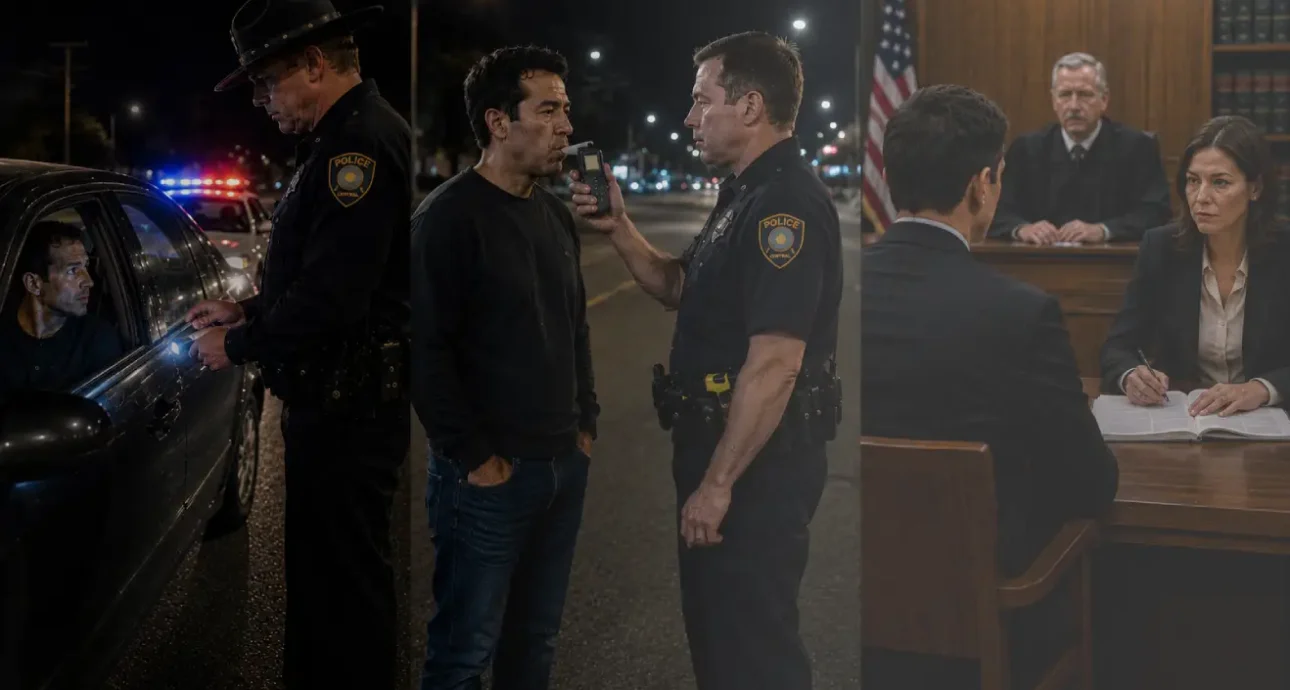
Thousands of Minnesotans each year, that single moment marks the beginning of the DWI arrest, a sprawling, fast-moving legal journey that touches your freedom, your driving privileges, your finances, your job opportunities, and your long-term record.
What catches many people off guard is that a DWI launches two legal battles simultaneously. Alongside the criminal prosecution, a separate license-revocation case proceeds under implied consent laws with its own hearings, deadlines, and penalties. Missing a critical step in either process can damage defense opportunities, driving privileges, and the overall outcome of the case.
DWI Lawyer Minnesota can help you navigate every stage of the process, from arrest to resolution, including traffic stops, testing, court appearances, sentencing, probation, and license reinstatement, while also addressing major 2025 legal changes affecting interlock requirements, lookback periods, and revocation procedures.
How a DWI Stop Usually Begins
A DWI arrest often begins with a routine traffic stop after officers observe unsafe driving, traffic violations, sudden braking, or suspicious behavior reported by other drivers or following a minor accident.
It is quite often that drivers are not aware of what a DWI arrest is when the police begin questioning, observing, and evaluating driving patterns. These moments may determine whether an officer develops probable cause to continue the investigation or end the encounter safely and lawfully
Knowing a DWI arrest is important because an arrest alone does not mean someone is guilty or convicted. It only reflects an officer’s belief that enough signs of impairment exist to continue the case.
Officers often rely on physical observations, statements, field sobriety tests, and preliminary breath results gathered during the traffic stop. Even casual conversation may be used as part of the investigation. These observations are documented in police reports and reviewed before charges proceed.
Why Two Cases Begin at Once
The single most important concept to grasp about the DWI arrest process in Minnesota is that one incident produces two distinct legal proceedings. Treat them as a single problem, and you will lose deadlines you didn’t know existed.
The Criminal Case
The criminal side of a DWI case involves formal charges, court hearings, possible jail time, fines, probation, and a criminal record. DWI offenses are divided into four levels based on BAC, prior offenses, and aggravating factors that increase the severity of penalties.
The Civil/Administrative Case
The administrative process is handled separately from court proceedings. Under implied consent laws, failing or refusing a chemical test can trigger an automatic license revocation shortly after arrest, often before the first criminal court appearance.
These two cases proceed independently. A favorable outcome in one does not automatically resolve the other. That dual structure is why early strategic decisions about testing, representation, and which deadlines to prioritize disproportionately shape the final outcome.
The Traffic Stop and Initial Investigation
Almost every DWI begins with a routine traffic stop. Understanding the mechanics of that encounter clarifies where your rights begin, where officers gather evidence, and where defense opportunities later emerge.
Reasonable Suspicion and the Initial Stop
Police only need reasonable suspicion for a traffic stop. Minor driving issues, equipment violations, or sobriety checkpoints during high-enforcement periods can give officers enough reason to begin a DWI investigation.
Field Sobriety Tests (FSTs)
Field Sobriety Tests consist of the Horizontal Gaze Nystagmus (HGN) eye examination, the walk-and-turn, and the one-leg stand. These tests are explicitly voluntary under the law, though officers rarely volunteer that fact. They are designed to be difficult to complete cleanly, even when sober variables like footwear, road grade, weather, and underlying medical conditions can all skew the results.
The Preliminary Breath Test (PBT)
Next, the officer may ask you to blow into a handheld preliminary breath test. The PBT, like the field sobriety tests, is also refusable, and its result is generally not admissible at trial to prove intoxication. It exists primarily to give the officer the probable cause needed to arrest and proceed to evidentiary testing at the station.
Probable Cause and the Arrest Decision
If the combined observations of the officer, driving conduct, demeanor, odor of alcohol, performance on FSTs, and PBT reading establish probable cause, you will be placed under arrest and transported for evidentiary chemical testing. Shifting it from investigation to formal prosecution.
Arrest, Implied Consent Advisory, and Evidentiary Chemical Test
What happens immediately after the handcuffs come on is among the most consequential phases of the entire DWI arrest process in Minnesota and one of the most frequently mishandled by people unfamiliar with the law.
The Implied Consent Advisory
Before requesting an evidentiary breath, blood, or urine test, the officer must read you the Implied Consent Advisory. This is a structured legal script that informs you of three key facts:
- The law requires you to submit to a chemical test.
- Refusal to test is a separate crime.
- You have the right to consult with an attorney before deciding whether to test within a reasonable time period.
Two versions of the advisory exist: one for breath-only testing, and one used when officers intend to apply for a search warrant to obtain blood or urine. If read improperly or the right to counsel is curtailed, a skilled defense attorney can often move to suppress the resulting test.
Your Right to Contact an Attorney Before Testing
Exercise it. Even a brief phone consultation can clarify whether to test, what to say, and what to expect. This is not stalling, it is a constitutionally and statutorily protected right.
Breath, Blood, or Urine and the BAC Thresholds
The officer chooses the test method, although you may sometimes request an alternative. The legal limits are outlined under the Implied Consent and Chemical Testing Law. BAC thresholds are:
- 0.08% for the standard adult driver
- 0.04% for commercial drivers
- 0.16% the threshold that converts a standard DWI into an aggravated offense
Refusing the Test
Refusing the test will result in a charge as a separate gross misdemeanor and frequently results in a longer license revocation than failing the test would have produced. This is a uniquely punitive feature and one of the reasons attorney consultation matters so much before testing.
DWI Arrest Booking Bail And Release Process
Once chemical testing concludes, the booking process begins, and questions about what happens after a DWI arrest and when you go home become the most immediate concern.
Booking, Fingerprinting, and Holding
You will be transported to the county jail or a designated detention facility, where you will be photographed, fingerprinted, searched, and processed. The administrative side of booking typically takes several hours, sometimes overnight, depending on the jurisdiction and staffing.
DWI Release Options Including Bail And Conditional Release
For a typical first-offense DWI with no aggravating factors and a BAC below 0.16, courts often release defendants on their own recognizance (ROR), meaning no money is required, only a promise to return to court. In other cases, you may be subject to conditional release with specific restrictions, or a monetary bail amount may be set.
Minnesota's Mandatory Bail Rules for Aggravated DWI
When aggravating factors exist, such as a high BAC, prior offenses, or a child passenger, stricter release conditions may apply. Defendants may need to post significant bail or accept electronic alcohol monitoring. These release terms are usually determined by a judge during a bail hearing held shortly after the arrest.
Common Pretrial Release Conditions
After release, courts often impose conditions such as avoiding alcohol or drugs, random testing, restricted driving, or electronic monitoring for serious offenses. Violating these terms can result in re-arrest or revoked release. The decisions made during the first few days after a DWI arrest can significantly affect defense strategies and the direction of the case.
Consulting a DWI lawyer early can help you better understand your options and next steps.
Parallel License Implied Consent Revocation and 60-Day Deadline
This is the section most readers underestimate and the one that destroys the most cases.
Notice of Revocation and the Temporary License
When you fail or refuse a chemical test, the officer issues a Notice and Order of Revocation on the spot. Under updated 2025 legislation, that notice now comes with a 14-day temporary license, limiting time to make important decisions before losing full driving privileges.
The 60-Day Window to Petition for Judicial Review
To contest the revocation, you must file a petition for judicial review within 60 days of receiving the notice or 63 days if a blood or urine test was used. This is one of the shortest deadlines. Miss it, and the revocation period becomes effectively unchallengeable, regardless of how strong your criminal defense becomes later.
Plate Impoundment and the New Invalidation Sticker Procedure
For aggravated offenses and certain repeat cases, plate impoundment may be required. As of the 2025 amendments, officers may now invalidate plates using a permanent sticker rather than physically seizing them, and the time periods for temporary permits and plate surrender doubled from seven to fourteen days. Tampering with the invalidation sticker is itself a misdemeanor.
Limited Licenses and the Ignition Interlock Program
If eligible, there may be two options for lawful driving during a revocation period: a limited license for restricted purposes such as employment, school, and medical appointments, and the Ignition Interlock Device program, which permits unrestricted driving in any vehicle equipped with an approved interlock.
2025 Update 20-Year Lookback and Extended Interlock Tracks
Using a 10-year lookback period for prior impaired driving offenses under Chapter 169A. The Ignition Interlock Program sets participation based on offense level and compliance. Violations, including alcohol readings around 0.02 or higher, can lead to extended or restarted interlock periods, and drivers may seek judicial review of administrative decisions where allowed by law.
From First Appearance to Verdict
The Minnesota DWI court process follows several hearings, each serving a specific purpose and creating opportunities to build a legal defense.
First Appearance / Arraignment (Rule 5 Hearing)
The first court appearance usually occurs 30 to 60 days after arrest. Misdemeanor cases involve an arraignment, while more serious charges involve a Rule 5 hearing. During this hearing, the judge explains the charges, reviews constitutional rights, discusses bail or release conditions, and asks for a plea. Most defendants plead not guilty at this stage to preserve possible defense strategies. If represented by counsel, an attorney may sometimes appear on the defendant’s behalf without requiring personal attendance in court.
Rule 8 Hearing
For gross misdemeanors and felonies, a Rule 8 hearing typically follows Rule 5. Its main purpose is to confirm representation, address discovery, and schedule the omnibus hearing.
Pretrial Conference / Settlement Conference
About six weeks after arraignment, the case enters a pretrial conference where evidence is reviewed, and plea negotiations begin. Many DWI cases resolve here through reduced charges or lighter sentencing agreements.
Omnibus Hearing / Contested Omnibus Hearing
The omnibus hearing allows the defense to challenge evidence, traffic stops, arrests, chemical testing procedures, or constitutional violations. If key evidence is suppressed, charges may be dismissed or reduced significantly. These hearings usually occur several weeks to months after the pretrial conference and can strongly influence the direction and outcome of a DWI case.
The Implied Consent Hearing (Civil Track)
Running parallel to the criminal proceedings, the implied consent hearing addresses the license revocation. Although civil in nature, it often produces sworn testimony from the arresting officer that is invaluable for identifying inconsistencies later used in the criminal case.
Trial
If no resolution is reached, the case proceeds to trial before a jury or judge. Prosecutors must prove guilt beyond a reasonable doubt, the highest legal standard in criminal proceedings.
Verdict and Sentencing
If acquitted, the criminal case ends, though license issues may remain. If convicted, sentencing follows immediately in many cases, while felony cases often require a pre-sentence investigation before final sentencing.
The Time Frame From Arrest to Outcome
DWI timeline in Minnesota from arrest to resolution can span from a few months for a clean plea to well over a year for a contested felony. The practical sequence most defendants experience is:
Hour 0: Traffic stop, field sobriety testing, arrest, and evidentiary chemical test at the station.
Hours 4 to 48: Booking, holding, and either release on recognizance or a bail hearing in front of a judge.
Day 7 (after 2025 amendments, Day 14): License revocation becomes fully effective once the temporary license expires.
Days 30 to 60: First court appearance, arraignment, or Rule 5 hearing where you formally enter a plea.
Day 60 (or Day 63 for blood/urine tests): Final deadline to petition for judicial review of license revocation.
Weeks 6 to 10: Pretrial conference and most plea negotiations.
Months 3 to 6: Omnibus hearing and rulings on suppression motions.
Months 6 to 12+: Trial, if no plea is reached.
Sentencing onward: Probation begins, treatment and chemical use assessments are completed, fines are paid, and the interlock period commences.
Within 90 days of sentencing: Deadline to file a notice of appeal with the Court of Appeals.
That timeline is a rough median. Aggravating factors, complex evidentiary disputes, scheduling backlogs, and trial demands can extend it considerably.
Degrees and Penalties in Minnesota
DWI offenses are divided into different levels of severity, with each degree carrying increasingly serious penalties and consequences.
Fourth-Degree DWI (Misdemeanor)
A standard first offense with no aggravating factors. Maximum penalties include 90 days in jail and a $1,000 fine. License revocation is typically 90 days, reduced to 30 days if you plead guilty quickly.
Third-Degree DWI (Gross Misdemeanor)
Triggered by one aggravating factor such as a prior DWI within the lookback window, a BAC of 0.16 or higher, a child in the vehicle, or test refusal. Maximum penalties: up to 1 year in jail and a $3,000 fine, including mandatory minimum jail sentences.
Second-Degree DWI (Gross Misdemeanor)
Two or more aggravating factors. Vehicle forfeiture and plate impoundment become significant possibilities, and bail requirements escalate sharply.
First-Degree DWI (Felony)
The most serious DWI category becomes a felony after multiple prior impaired-driving offenses or certain serious alcohol-related convictions. Penalties can include several years in prison, large fines, extended probation, and long-term ignition interlock requirements.
Aggravating Factors at a Glance
- Prior qualifying impaired-driving incident within the lookback window
- BAC of 0.16% or higher at the time of arrestA passenger under the age of 16 in the vehicle.
Resolutions like Plea Bargains, Sentencing, Probation, and Appeals
DWI cases conclude not at trial but through some form of negotiated resolution. Even so, the path from arrest to true closure involves several distinct components.
Negotiated Pleas vs. Going to Trial
A plea bargain provides a predictable outcome, while a trial offers a chance of acquittal but a greater risk. The decision depends on evidence strength, prior record, defense options, and risk tolerance.
Typical Sentencing Components
Even a first-time DWI sentence usually layers multiple obligations: a brief jail term, fines and court fees, supervised or unsupervised probation, a mandatory chemical use assessment, alcohol education or treatment, and conditions like abstinence and random testing.
Probation Conditions and Violation Consequences
Probation in DWI cases typically lasts one to six years. Violating any condition, like a single positive alcohol test or a missed appointment, can trigger a probation violation hearing where the previously stayed jail sentence may be imposed.
The Appeals Process
If a legal error affected the outcome, an appeal may be filed within 90 days of sentencing. Appeals review legal mistakes, not facts, and the process can take several months with limited success rates.
License Reinstatement
Driving privileges are restored only after completing all reinstatement requirements, including fees, insurance filings, alcohol programs, and, in many cases, successful completion of the ignition interlock program.
Expungement Possibilities
Offering limited expungement relief for certain DWI offenses, and SF 2909, effective January 2026, opens new expungement pathways worth discussing with counsel once your case is fully resolved and your post-conviction waiting period has elapsed.
Defense Opportunities Throughout the Arrest Process
A defense attorney does not simply react to charges; auditing the DWI steps of arrest in the Minnesota process for procedural and constitutional vulnerabilities.
Common areas of attack include:
- The legality of the stop. Without lawful, reasonable suspicion, evidence flowing from the stop may be suppressed.
- The administration of field sobriety tests. Officers must follow specific NHTSA protocols; deviations undermine reliability.
- The implied consent advisory. Misreading, omitting key warnings, or denying access to counsel can invalidate the test.
- Chemical test reliability. Calibration logs, maintenance records, breath sample timing, blood draw chain of custody, and lab procedures are all fair game.
- Constitutional violations. Miranda breaches, illegal searches, and prolonged detentions can support motions to suppress.
- Officer credibility. Body-cam and squad-car footage frequently contradict the polished narrative of an officer’s police report.
Engaging counsel early gives your attorney room to act before deadlines lapse, memories fade, and evidence is lost.
Why the First Days After Arrest Matter Most
The DWI process involves multiple legal proceedings, strict deadlines, and consequences that can affect driving privileges, employment, insurance costs, and daily life for years. Quick action is critical because missing important deadlines may limit available defense options.
However, the legal system can still be managed effectively with the right guidance. Every stage of the case presents opportunities to improve the outcome through informed decisions and strong legal representation. Seeking experienced legal counsel soon after an arrest can make a significant difference in the direction and resolution of the case.
If you or someone you know is facing a DWI charge, do not let the calendar run against you. Call (612) 255-5922 or visit our Contact Us page.
Frequently Asked Questions
How long does a DWI case take in Minnesota from start to finish?
Most first-offense DWI cases resolve within three to six months when uncontested. However, cases involving suppression motions, disputed evidence, trials, or felony charges often take much longer, sometimes extending nine to eighteen months or more. Appeals and highly contested proceedings can further lengthen the overall timeline before the case finally reaches resolution.
Will I lose my license immediately after a DWI arrest?
Your license is not revoked immediately after a DWI arrest. Under the 2025 amendments, a Notice of Revocation starts a 14-day temporary license period before revocation begins. Drivers then have 60 days from receiving notice to file a petition for judicial review and challenge the revocation in court.
How much does a DWI cost in Minnesota, in total?
Fines, court costs, reinstatement fees, higher insurance premiums, ignition interlock expenses, treatment programs, and lost wages can make a DWI extremely expensive. Even a first-offense misdemeanor often results in total out-of-pocket costs exceeding $10,000 to $20,000 over several years, depending on the circumstances and penalties involved.
Do I have to attend every court hearing?
In many misdemeanor cases, an attorney may appear on your behalf during routine court hearings, reducing the need for personal attendance. However, trials and several felony-related proceedings usually require you to appear in court personally, as the judge may need direct participation, testimony, or acknowledgment from the defendant.